Loyalty on Trial
Hirabayashi v. United States (1943) · Yasui v. United States (1943) · Korematsu v. United States (1944) · Ex parte Endo (1944)
On February 19, 1942, ten weeks after Pearl Harbor, President Franklin D. Roosevelt signed Executive Order 9066, authorizing the military to exclude "any or all persons" from designated zones along the West Coast.1 No part of the order named Japanese Americans specifically. It didn't need to. Everyone involved in writing and enforcing it knew exactly who it meant. Over the following months, curfews, then exclusion orders, then mass removal pushed approximately 120,000 people, about two-thirds of them American citizens by birth and the rest Issei immigrants barred by law from ever becoming citizens themselves, out of their homes and into hastily built camps across the interior West, on the theory that their loyalty to the country that held their citizenship could not be trusted, and could not even be individually assessed, because of their ancestry alone.
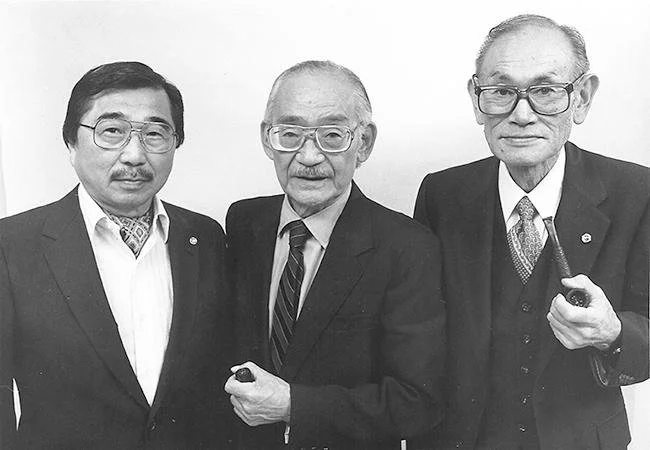
Four cases reached the Supreme Court contesting different pieces of this machinery, and the four people behind them did not coordinate, did not agree with each other's strategies, and ended up, by accident of timing and circumstance, testing four different questions: a curfew, a citizenship technicality, the exclusion itself, and finally, the detention that followed it. Three of them lost. The fourth won, on the same day as one of the losses, in a decision that reveals just how narrow the difference between "lawful" and "unlawful" really was in the government's own reasoning.
A Senior Who Turned Himself In
Gordon Hirabayashi was a senior at the University of Washington, a Quaker pacifist active in the campus YMCA, when the curfew order took effect in Seattle in the spring of 1942.2 He had, by his own later account, initially expected the Constitution to protect him as a citizen, and was surprised to discover how quickly that expectation collapsed once the government decided his ancestry mattered more than his citizenship. "It was not acceptable," he told the historian Ronald Takaki decades later, "to be less than a full citizen in a white man's country."3
He decided to resist deliberately rather than be swept along passively. He stayed in Seattle after Japanese Americans there were ordered to report for removal, then turned himself in to the FBI on May 16, 1942, with a four-page written statement explaining why he refused to comply.4 A liberal Washington state senator, Mary Farquharson, encouraged him to treat his case as a deliberate constitutional test and organized a defense committee on his behalf, support that mattered because the national ACLU, wary of crossing a wartime president it broadly supported, initially declined to back him.5 A jury convicted him on both curfew and exclusion violations after just ten minutes of deliberation.
The case that reached the Supreme Court in 1943 ended up testing only the curfew, not the more consequential question of exclusion itself, and how that happened is worth understanding precisely. Hirabayashi had been convicted on two counts, curfew and exclusion violations, each carrying a thirty-day sentence. He requested that his sentence be increased to ninety days, so he could serve it at a federal facility outside the military exclusion zone rather than a local jail inside it. The district court obliged, sentencing him to ninety days, but made the two counts run concurrently rather than consecutively, which legally merged them into a single sentence. Under the doctrine governing concurrent sentences, a reviewing court could uphold the conviction by examining just one of the two underlying charges without needing to reach the other. The Supreme Court used exactly that opening, ruling only on the curfew violation and declining to address the exclusion count at all, allowing it to reach a unanimous 8-0 opinion without ever confronting the harder, more consequential constitutional question.6 Chief Justice Harlan Fiske Stone, writing for the Court, accepted the government's claim that wartime conditions made a curfew applied specifically to one ancestry group a reasonable wartime measure.7 The opinion didn't decide whether mass removal itself was constitutional. It simply established that the Court would defer heavily to military judgment about wartime necessity, and that deference left the door open for what came next.
What happened after the ruling has its own dark comedy. The government convicted Hirabayashi, sentenced him to serve his term at a federal facility in Arizona, and then declined to pay for his transportation there. He hitchhiked. When he arrived two weeks behind the schedule the prison expected, the wardens discovered they didn't have his paperwork in order and briefly considered simply sending him home, an idea he worried would look suspicious; they suggested he go out for dinner and a movie while they sorted out the documents, and by the time he'd done so, his commitment papers had been found.8 A man convicted of defying the government's authority over his own movement spent the hours before his imprisonment treated, almost absurdly, like an ordinary guest waiting for a room to be readied.
A Lawyer Who Walked the Streets to Get Arrested
Minoru Yasui had graduated from the University of Oregon's law school in 1939, the first Japanese American admitted to the Oregon bar, and was working at the Japanese consulate in Chicago when Pearl Harbor was attacked.9 He resigned the same week, returned to Oregon, and tried nine separate times to report for active duty with the Army, in which he held a reserve commission as a second lieutenant. Each time, he was turned away because of his ancestry.10
Unable to serve in the way he believed his citizenship entitled him to, Yasui set out instead to challenge the curfew directly, and he wanted someone else to be the test case, reasoning that a deliberate volunteer would make a stronger legal record than someone simply caught violating the order. He couldn't find anyone willing to take the risk. So he decided to do it himself. On the evening of March 28, 1942, the first night the Portland curfew was in effect, he walked the streets of downtown Portland after the curfew hour specifically to get arrested.11 What followed was almost farcical: he approached a police officer, identified himself as Japanese American, and asked to be taken into custody. The officer told him to go home. He kept trying. Eventually he gave up on being noticed and walked into the police station himself, where an officer finally obliged him.12
His trial produced a genuinely strange result. The federal judge, James Alger Fee, ruled that the curfew order was unconstitutional as applied to American citizens, a real and significant finding, but then went further and held, on his own initiative rather than at the government's urging, that Yasui himself, because of his prior employment at the Japanese consulate, had effectively renounced his citizenship and become an enemy alien to whom the curfew validly applied regardless.13 The government had not even argued for this outcome; Fee raised it sua sponte. Yasui was sentenced to a year in prison and a $5,000 fine, the maximum the statute allowed, specifically because the judge had just ruled he wasn't a citizen at all. He spent nine months in solitary confinement at the Multnomah County Jail awaiting his appeal.
When the Supreme Court ruled on Yasui's case the same day as Hirabayashi's, it disposed of the substantive curfew question by simply pointing to its reasoning in the companion case, and then turned to the citizenship question Judge Fee had invented. The government, notably, did not defend Fee's finding; it had never argued Yasui wasn't a citizen, and conceded as much before the Supreme Court.14 The Court vacated the year-long sentence and sent the case back for resentencing under the correct premise that Yasui remained a citizen the whole time, which meant the harshest possible punishment he'd received had been imposed entirely on the strength of a finding even his prosecutors didn't believe.
A Welder, His Girlfriend, and a Failed Disguise
Fred Korematsu was twenty-three, working as a welder in Oakland, when the exclusion orders went into effect in the spring of 1942. His parents and three brothers reported as ordered to the Tanforan Assembly Center, a converted racetrack south of San Francisco. Korematsu did not go with them.15
He stayed behind in the Bay Area with his girlfriend, Ida Boitano, an Italian American whose own parents disapproved of the relationship on racial grounds even as the government was about to imprison him for the same reason.16 The two of them wanted to relocate somewhere away from the West Coast where they might live more freely. By some accounts at Ida's urging, Korematsu underwent minor plastic surgery on his nose, hoping it might help him pass as something other than Japanese; by his own later account the procedure changed very little, and people who already knew him recognized him without difficulty.17 On Memorial Day, May 30, 1942, a San Leandro police officer stopped Korematsu and Ida on the street, ostensibly checking identification under wartime restrictions that applied broadly across the area. Korematsu gave the name Clyde Sarah and claimed Hawaiian and Spanish ancestry. Accounts differ on exactly what happened next: by some versions the officer's growing suspicion forced the truth out; by others, Korematsu volunteered it himself rather than continue the deception. Either way, the truth came out, and he was arrested.18
While he sat in jail, Ernest Besig, head of the ACLU's Northern California chapter, visited him and asked whether he'd be willing to make his case a constitutional test, a request the ACLU's own national leadership had actually discouraged Besig from pursuing, since several of its prominent members were close to the Roosevelt administration and wary of the political cost of opposing the president during wartime.19 Korematsu agreed anyway.
By the time his case reached the Supreme Court in October 1944, the legal terrain had already been shaped by losses in Hirabayashi and Yasui the year before. The Court's decision, issued December 18, 1944, upheld Korematsu's conviction 6 to 3.20 Justice Hugo Black's majority opinion insisted exclusion wasn't really about race at all, only "military urgency," even as the order it upheld applied to one ancestry group exclusively and to no one else. Justice Robert Jackson's dissent called the ruling out for what it actually was, in language that has outlived nearly everything else written about the case: "the Court for all time has validated the principle of racial discrimination in criminal procedure and of transplanting American citizens." Justice Frank Murphy went further still, writing plainly that what the government called military necessity was, in fact, racial discrimination dressed in the language of wartime urgency.
The government's own internal case was weaker than the public record suggested at the time. Decades later, the legal historian Peter Irons and researcher Aiko Herzig-Yoshinaga uncovered documents showing that intelligence agencies had told the Justice Department, before the Supreme Court ever heard the case, that they had found no evidence supporting the sabotage and disloyalty claims the government's briefs relied on, and that this contrary evidence had been suppressed rather than disclosed to the Court.21 In 1983, on the strength of that discovery, a federal judge vacated Korematsu's conviction. He had carried the case, by his own daughter's account, as a private weight for nearly four decades, rarely discussing it even with his own children, who learned about their father's role in one of the most consequential cases in American constitutional history from a high school history class rather than from him.22
The One Who Won, the Same Day
Mitsuye Endo never broke a curfew, never refused an order, and never set out to be arrested. She was twenty-one, working as a clerk for the California Department of Motor Vehicles in Sacramento, when the state fired her and roughly three hundred other Japanese American civil servants in early 1942, before the exclusion orders had even forced her from her home.23 She joined a group of dismissed employees challenging their firings through the Japanese American Citizens League, and the attorney handling that fight, James Purcell, eventually shifted his strategy toward something larger: a direct habeas corpus challenge to the detention itself, once exclusion overtook the original employment dispute and swept Endo and the others into the camps regardless.
Purcell needed a plaintiff whose loyalty would be as difficult to challenge as possible, in the hope of forcing the government into a position where it couldn't credibly argue otherwise. He chose Endo specifically because she was Methodist, had never traveled to Japan, and had a brother already serving in the United States Army.24 By Endo's own account, she agreed almost reluctantly, telling an interviewer decades later, "I agreed to do it at that moment, because they said it's for the good of everybody, and so I said, well if that's it, I'll go ahead and do it."25 She did not relish the role of test case. She accepted it because she was asked to, and then held to it for over two years while the case worked through the courts, at one point refusing the government's offer to release her on the condition that she never return to the West Coast, a condition her lawyer advised her to reject on principle.26
The Supreme Court ruled on her case the same day it ruled against Korematsu, and the contrast between the two opinions is the whole point. Justice William O. Douglas, writing for a unanimous Court, didn't touch the underlying question of whether the government had the power to exclude or detain Japanese Americans in the first place. He simply held that once the government itself conceded, as it had in Endo's case, that a citizen was loyal and posed no danger, no statute gave the War Relocation Authority any further authority to keep her confined.27 "We are of the view that Mitsuye Endo should be given her liberty," the opinion stated, declining to "come to the underlying constitutional issues which have been argued." It was the narrowest possible victory: not a ruling that the camps were unconstitutional, only a ruling that this one woman, whose loyalty the government had already conceded in the litigation itself, could no longer be held inside one.
The government appears to have had advance warning of how the ruling would go. The day before the decision was publicly announced, the War Department issued its own proclamation lifting the West Coast exclusion order entirely, a timing that historians have generally read as a deliberate effort to get ahead of a court decision the government anticipated and could not control, though the full extent of the coordination behind that timing remains debated.28 Endo had won the only outright victory among the four cases. The same day, in the opinion right next to hers, Korematsu had lost. The difference between them was not that one was more loyal than the other, or that one had a stronger claim to citizenship. The difference was simply which narrow legal question each case happened to test, and the government had structured the entire system so that almost any answer to almost any one of those narrow questions could leave the broader machinery of exclusion and detention completely intact.
Four Questions, One Machine
Read together, these four cases describe a single piece of wartime machinery tested at four different points of contact, by four people who never coordinated a shared strategy and ended up, almost by accident, dividing the legal questions among themselves. Hirabayashi tested the curfew and lost. Yasui tested the same curfew, plus his own citizenship, and the judge handling his case introduced a second way for him to lose that even the government wasn't asking for. Korematsu tested exclusion itself, the broadest and most consequential question of the four, and lost in the opinion that did the most lasting constitutional damage; the case is often cited today as the origin point for applying heightened judicial scrutiny to racial classifications, even though the Court applied that heightened standard and still upheld the government's action, showing that close scrutiny in name does not guarantee a different result in substance. Korematsu also raised his detention in the camps, not just his exclusion from the military zone, but the Court ruled that he had failed to raise the detention issue early enough in the proceedings for it to be properly before them, a technical ruling that conveniently allowed the Court to avoid addressing the constitutionality of the camps themselves in the case that bore his name.29 Endo tested only the narrowest possible question, detention after loyalty had already been conceded, and won, precisely because winning that question required the Court to decide nothing at all about the legitimacy of everything that had happened before it.
None of the four men and women behind these cases got to choose which question their case would test. Hirabayashi and Yasui chose to resist deliberately, but the legal questions that ultimately reached the Supreme Court were shaped as much by concurrent sentences, an overreaching trial judge, and the order in which cases happened to be argued as by anything the men themselves controlled. Korematsu was approached in jail by a lawyer looking for a test case, not the other way around. Endo was selected specifically because she hadn't done anything; her entire usefulness to her own attorney was her passivity, her unimpeachable ordinariness. Constitutional protection, in other words, depended less on what these four people did or who they were than on which narrow technical question the accident of litigation happened to put in front of the Court.
The personal connections to this cluster of cases run deeper for me than for most of the others in this series, and I want to note that briefly rather than let it sit unspoken. I've had the privilege of meeting Karen Korematsu, Fred's daughter, on several occasions, and of narrating the first staged reading of an excerpt from a play about Minoru Yasui's life, an experience that put me in the room with members of the Yasui family directly. At one of those meetings, Karen reminded me that the JACL had initially opposed her father's case too, before history rewrote him as a hero, a parallel she drew directly to my own case and the mixed support it received at the time from within Asian American advocacy circles. I've written more about that conversation, and what I've come to think of as the cost of carrying a case like this, elsewhere on this site. Those relationships matter to me. They are not, however, what makes these four cases matter to the country, and I've tried to keep them a small part of this account rather than its center, because the history itself, and the people who actually lived it, carry more than enough weight on their own.
A Community Divided Against Itself
None of this happened with the Japanese American community standing unanimously behind the four people who took their cases to court. The opposite was often true, and it's worth being honest about that rather than letting hindsight smooth it into a simpler story.
The Japanese American Citizens League, the organization most positioned to speak for the community nationally, actively opposed the resistance strategy Yasui and Hirabayashi pursued. Four days after Yasui deliberately got himself arrested, JACL national secretary Mike Masaoka issued a bulletin stating the organization's opposition to test cases challenging the government's orders at all, on the theory that visible defiance would undermine a broader strategy of demonstrated cooperation, the same strategy embodied in the "Japanese American Creed" Masaoka had written two years earlier, pledging loyalty and submission as proof of belonging.30 Many JACL leaders sincerely believed this approach, however unpalatable it looks in retrospect, gave the community its best chance of reducing hostility and preserving some long-term standing once the war ended; it was a wager about strategy, made under genuine duress, not simply a failure of nerve. Not everyone inside the community accepted that bargain quietly, even at the time. Activist William Hohri later called the creed "an apologetic self-declaration of imagined racial or ethnic inferiority," and another critic paraphrased its spirit more bluntly: you can treat us like crap, but we're still going to be loyal.31 Yasui in particular paid a steep personal price for defying the JACL's preferred strategy; the journalist Jimmie Omura, one of the era's sharpest internal critics, would still be calling Yasui an inu, a community informer and traitor, decades after the war, when Denver's Japanese American community moved to honor him with a statue.32
The JACL's position softened over time, not least because it eventually filed its own amicus brief supporting Korematsu's case once the legal landscape had shifted. But the deeper reconciliation took far longer. It was not until the year 2000, fifty-seven years after Hirabayashi's conviction, that the JACL formally voted to recognize the wartime resisters as "Resisters of Conscience," reversing decades of official condemnation.33 By then, Hirabayashi, Yasui, and Korematsu had all died. Only Fred Korematsu's daughter, and others like her who carried these stories forward after the fact, got to see the formal apology arrive.
This pattern, community institutions building real, sustained legal and organizing capacity, sometimes disagreeing sharply with each other about strategy, and only resolving those disagreements with the benefit of decades of hindsight, runs through this entire series. The Chinese Six Companies' funding of Yick Wo's defense and, later, Wong Kim Ark's case were early versions of the same instinct: that a community shut out of the franchise needed its own institutions if it wanted any legal recourse at all. The JACL itself, despite its World War II missteps, became exactly that kind of institution over the following decades, eventually leading the campaign that produced the Civil Liberties Act of 1988. Organizations like the Asian American Defense and Education Fund and the Chinese American Citizens Alliance carry forward the same basic function today, though their missions, memberships, and politics differ enormously from each other and from the wartime JACL; what links them is the underlying function, not a shared ideology: building the institutional memory and legal capacity that lets a community respond collectively, rather than leaving each individual case to whatever lawyer happens to be willing to take it on. That infrastructure doesn't always agree with itself in the moment. It rarely does. But its existence, however contested, has mattered every single time this series has found a plaintiff who wasn't simply standing alone.
What the System Was Built to Protect
It would be comforting to read Korematsu's loss and Endo's win as evidence that the system eventually corrected itself, that the Court drew a line somewhere and held it. The actual story is less reassuring. The Court drew its line at the narrowest possible point, the question of detaining someone the government had already certified as loyal, and left every larger, more consequential question, curfew, exclusion, the basic premise that ancestry alone could justify suspicion, constitutionally unresolved rather than affirmed or rejected. Korematsu's conviction wasn't formally vacated until 1983, on the strength of evidence the government had hidden from the Court the first time around, not because the original legal reasoning had been reconsidered and rejected by the Court itself. The Supreme Court has never formally overruled its own 1944 decision in Korematsu. In 2018, deciding an entirely different case about a different president's travel ban, Chief Justice John Roberts wrote that the forcible relocation of citizens "on the basis of race" was "objectively unlawful," language widely read as disavowing Korematsu without the formality of overturning it directly.34 Seventy-four years is a long time for a wrong this significant to sit only disavowed, never undone.
Related Cases and Precedents
Ozawa v. United States (1922) / United States v. Bhagat Singh Thind (1923) — The same willingness to let "common understanding" of race override individual fact and circumstance, examined earlier in this series for naturalization law, resurfaces here applied to citizens by birth rather than immigrants seeking citizenship, with far larger and more consequential stakes.
Civil Liberties Act of 1988 — Congress formally apologized and provided $20,000 in reparations to each surviving person incarcerated under Executive Order 9066, a remedy that arrived more than four decades after the fact and that no court ever ordered.
Trump v. Hawaii (2018) — The Supreme Court's language disavowing Korematsu arrived in the course of upholding an executive travel ban on different grounds, illustrating the same pattern this series keeps returning to: judicial deference to claimed national-security necessity tends to survive, even when the specific historical episode that produced it gets disowned.
Padilla v. Hanft / Hamdi v. Rumsfeld (2004) — Decades later, Ex parte Endo's narrow holding about the limits of detention authority over citizens resurfaced in the context of post-9/11 detention cases, cited as precedent for the principle that even broad wartime authority has limits when applied to citizens whose loyalty isn't in dispute.
Sources and Further Reading
For deeper reading:
Peter Irons, Justice at War: The Story of the Japanese American Internment Cases (Oxford University Press, 1983)
Lorraine K. Bannai, Enduring Conviction: Fred Korematsu and His Quest for Justice (University of Washington Press, 2015)
Cherstin Lyon, Prisons and Patriots: Japanese American Wartime Citizenship, Civil Disobedience, and Historical Memory (Temple University Press, 2011)
John Tateishi, And Justice for All: An Oral History of the Japanese American Detention Camps (Random House, 1984)
James Hirabayashi and Lane Hirabayashi, eds., A Principled Stand: The Story of Hirabayashi v. United States
Footnotes
Densho Encyclopedia, "Gordon Hirabayashi." ↩
Id.; HistoryLink.org, "Hirabayashi, Gordon K. (1918-2012)." ↩
HistoryLink.org, supra note 2, quoting Hirabayashi's interview with Ronald Takaki. ↩
Wikipedia, "Hirabayashi v. United States." ↩
Id. ↩
Densho Encyclopedia, supra note 1; Dale Minami, personal communication, July 2025. The specific procedural sequence, Hirabayashi's own request for the sentence increase, the district court's concurrent rather than consecutive sentencing, and the Supreme Court's use of the resulting merger to avoid ruling on the exclusion count, was clarified in direct correspondence with Minami, one of the attorneys who led the 1983 coram nobis team that vacated Hirabayashi's conviction. ↩
Hirabayashi v. United States, 320 U.S. 81 (1943). ↩
Wikipedia, supra note 4, on the circumstances of Hirabayashi's transport to prison. ↩
Oregon Encyclopedia, "Minoru Yasui (1916–1986)." ↩
Id. ↩
Densho Encyclopedia, "Yasui v. United States." ↩
OPB, "Honoring Minoru Yasui," interview with Joan Emerson Yasui. ↩
United States v. Minoru Yasui, 48 F. Supp. 40 (D. Or. 1942); Wikipedia, "Yasui v. United States." ↩
Yasui v. United States, 320 U.S. 115 (1943), opinion text via Cornell Legal Information Institute. ↩
Wikipedia, "Fred Korematsu." ↩
Id.; National WWII Museum, "Korematsu v. United States: 80 Years Later." ↩
Smithsonian Magazine, "Fred Korematsu Fought Against Japanese Internment in the Supreme Court... and Lost."↩
National Geographic, "How Fred Korematsu Defied Japanese Incarceration." ↩
Wikipedia, supra note 15, on Ernest Besig's role and the national ACLU's internal disagreement. ↩
Korematsu v. United States, 323 U.S. 214 (1944). ↩
Library of Congress, "Fred Korematsu's Drive for Justice."; Biography.com, "Fred Korematsu." ↩
Biography.com, supra note 21, quoting Karen Korematsu. ↩
National Park Service, "Mitsuye Endo." ↩
Densho Encyclopedia, "Mitsuye Endo." ↩
Id., quoting Endo's interview with John Tateishi. ↩
EBSCO Research Starters, "Mitsuye Endo." ↩
Ex parte Endo, 323 U.S. 283 (1944). ↩
Wikipedia, "Ex parte Endo."; Densho Encyclopedia, "Remembering Mitsuye Endo." ↩
Dale Minami, personal communication, July 2025; Korematsu v. United States, 323 U.S. 214 (1944). ↩
Densho Encyclopedia, "Yasui v. United States," on JACL national secretary Mike Masaoka's April 7, 1942 bulletin; Densho Encyclopedia, "Mike Masaoka," on the "Japanese American Creed." ↩
Crimson Historical Review, "Nana Korobi Ya Oki: Japanese Resistance during the Japanese Internment," quoting William Hohri and paraphrasing Henry Miyatake's criticism of the JACL creed. ↩
Discover Nikkei, "Peculiar Odyssey: Newsman Jimmie Omura's Removal from and Regeneration within Nikkei Society, History, and Memory." ↩
Crimson Historical Review, supra note 31, on the JACL's 2000 resolution recognizing wartime resisters; Densho Encyclopedia, "Japanese American Citizens League," on the organization's eventual amicus support for Korematsu. ↩
Wikipedia, supra note 15, quoting Chief Justice Roberts's opinion in Trump v. Hawaii, 585 U.S. 667 (2018). ↩
Related Cases and Precedents
Ozawa v. United States (1922) / United States v. Bhagat Singh Thind (1923) — The same willingness to let "common understanding" of race override individual fact and circumstance, examined earlier in this series for naturalization law, resurfaces here applied to citizens by birth rather than immigrants seeking citizenship, with far larger and more consequential stakes.
Civil Liberties Act of 1988 — Congress formally apologized and provided $20,000 in reparations to each surviving person incarcerated under Executive Order 9066, a remedy that arrived more than four decades after the fact and that no court ever ordered.
Trump v. Hawaii (2018) — The Supreme Court's language disavowing Korematsu arrived in the course of upholding an executive travel ban on different grounds, illustrating the same pattern this series keeps returning to: judicial deference to claimed national-security necessity tends to survive, even when the specific historical episode that produced it gets disowned.
Padilla v. Hanft / Hamdi v. Rumsfeld (2004) — Decades later, Ex parte Endo's narrow holding about the limits of detention authority over citizens resurfaced in the context of post-9/11 detention cases, cited as precedent for the principle that even broad wartime authority has limits when applied to citizens whose loyalty isn't in dispute.
Sources and Further Reading
For deeper reading:
Peter Irons, Justice at War: The Story of the Japanese American Internment Cases (Oxford University Press, 1983)
Lorraine K. Bannai, Enduring Conviction: Fred Korematsu and His Quest for Justice (University of Washington Press, 2015)
Cherstin Lyon, Prisons and Patriots: Japanese American Wartime Citizenship, Civil Disobedience, and Historical Memory (Temple University Press, 2011)
John Tateishi, And Justice for All: An Oral History of the Japanese American Detention Camps (Random House, 1984)
James Hirabayashi and Lane Hirabayashi, eds., A Principled Stand: The Story of Hirabayashi v. United States
Footnotes
Densho Encyclopedia, "Gordon Hirabayashi."↩
Id.; HistoryLink.org, "Hirabayashi, Gordon K. (1918-2012)."↩
HistoryLink.org, supra note 2, quoting Hirabayashi's interview with Ronald Takaki. ↩
Wikipedia, "Hirabayashi v. United States."↩
Id.↩
Densho Encyclopedia, supra note 1. ↩
Hirabayashi v. United States, 320 U.S. 81 (1943). ↩
Wikipedia, supra note 4, on the circumstances of Hirabayashi's transport to prison. ↩
Oregon Encyclopedia, "Minoru Yasui (1916–1986)."↩
Id.↩
Densho Encyclopedia, "Yasui v. United States."↩
OPB, "Honoring Minoru Yasui," interview with Joan Emerson Yasui. ↩
United States v. Minoru Yasui, 48 F. Supp. 40 (D. Or. 1942); Wikipedia, "Yasui v. United States."↩
Yasui v. United States, 320 U.S. 115 (1943), opinion text via Cornell Legal Information Institute. ↩
Wikipedia, "Fred Korematsu."↩
Id.; National WWII Museum, "Korematsu v. United States: 80 Years Later."↩
Smithsonian Magazine, "Fred Korematsu Fought Against Japanese Internment in the Supreme Court... and Lost."↩
National Geographic, "How Fred Korematsu Defied Japanese Incarceration."↩
Wikipedia, supra note 15, on Ernest Besig's role and the national ACLU's internal disagreement. ↩
Korematsu v. United States, 323 U.S. 214 (1944). ↩
Library of Congress, "Fred Korematsu's Drive for Justice."; Biography.com, "Fred Korematsu."↩
Biography.com, supra note 21, quoting Karen Korematsu. ↩
National Park Service, "Mitsuye Endo."↩
Densho Encyclopedia, "Mitsuye Endo."↩
Id., quoting Endo's interview with John Tateishi. ↩
EBSCO Research Starters, "Mitsuye Endo."↩
Ex parte Endo, 323 U.S. 283 (1944). ↩
Wikipedia, "Ex parte Endo."; Densho Encyclopedia, "Remembering Mitsuye Endo."↩
Densho Encyclopedia, "Yasui v. United States," on JACL national secretary Mike Masaoka's April 7, 1942 bulletin; Densho Encyclopedia, "Mike Masaoka," on the "Japanese American Creed." ↩
Crimson Historical Review, "Nana Korobi Ya Oki: Japanese Resistance during the Japanese Internment," quoting William Hohri and paraphrasing Henry Miyatake's criticism of the JACL creed. ↩
Discover Nikkei, "Peculiar Odyssey: Newsman Jimmie Omura's Removal from and Regeneration within Nikkei Society, History, and Memory."↩
Crimson Historical Review, supra note 31, on the JACL's 2000 resolution recognizing wartime resisters; Densho Encyclopedia, "Japanese American Citizens League," on the organization's eventual amicus support for Korematsu. ↩
Wikipedia, supra note 15, quoting Chief Justice Roberts's opinion in Trump v. Hawaii, 585 U.S. 667 (2018). ↩