
For Educators: Teaching Matal v. Tam

Matal v. Tam (2017) is one of the most taught First Amendment cases of the past decade — and Simon Tam, the person who brought and won the case, is available to bring it to life for your students.
Free resources below. Book Simon for your campus or classroom here.
Jump to:
About the Case · Why It's Taught · Suggested Reading · Discussion Questions · Ongoing Legal Advocacy · Bring Simon to Your Campus
About the Case

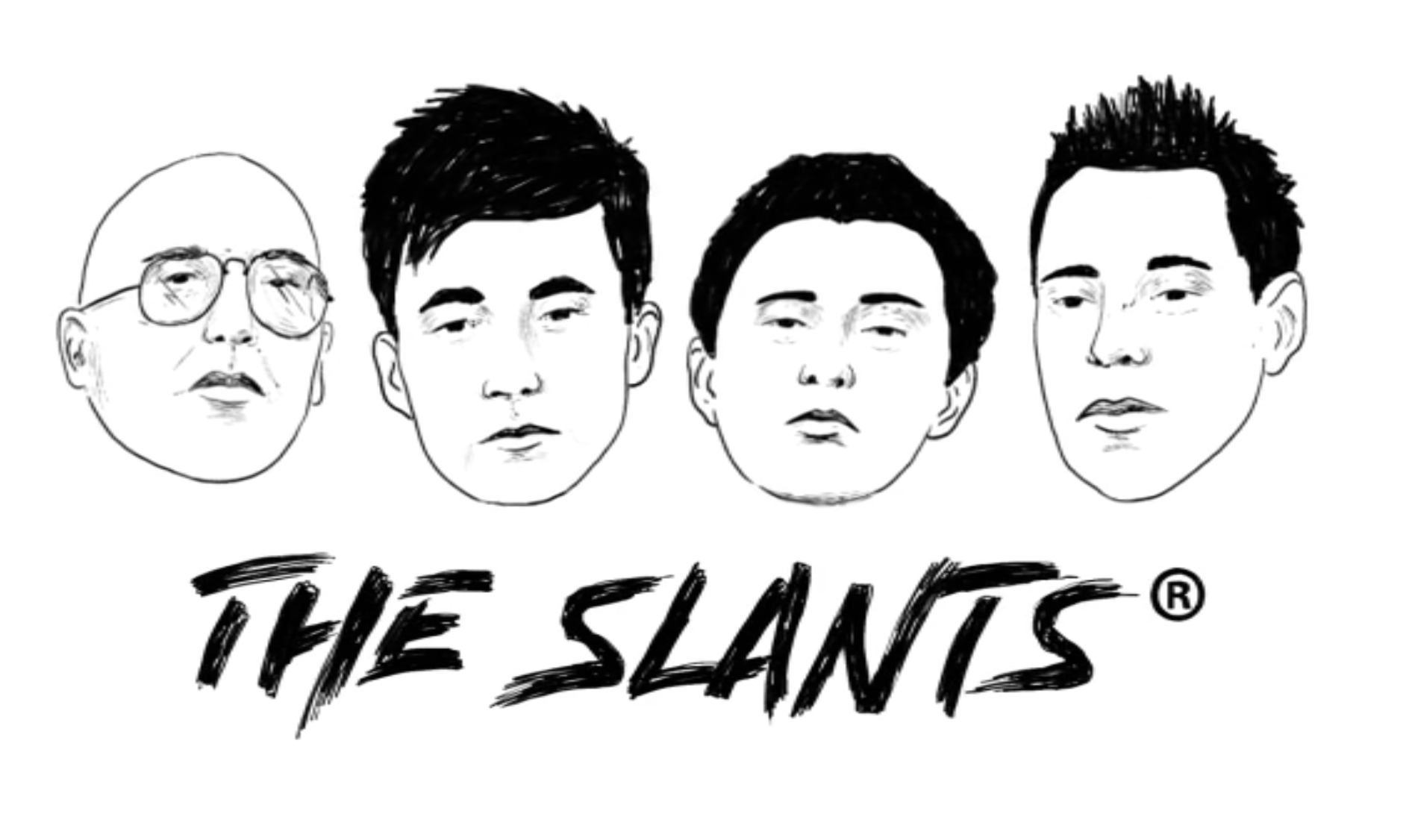
In 2006, Simon Tam founded The Slants, an all-Asian American dance rock band based in Portland, Oregon. The name was intentional. "The Slants" is a term that has long been used as a racial slur against people of Asian descent, and Tam wanted to reclaim it: to take a word historically used to denigrate his community and turn it into something the community owned and defined for itself. This practice, known as reappropriation, has a long history in the culture of traditionally marginalized communities, but it was about to create a legal fight that would go all the way to the Supreme Court.
When Tam applied to register "The Slants" as a federal trademark in 2010, the U.S. Patent and Trademark Office (USPTO) rejected the application, using a provision in the Lanham Act (the federal law governing trademarks) that prohibited registering any mark that could "disparage" a person, group, or institution. In the government's view, "The Slants" disparaged people of Asian descent, and therefore couldn't be registered. It didn't matter that the band was Asian American, or that the name was chosen to empower rather than demean. The government's position was that it had the authority to decide which names were acceptable.
Tam disagreed. And he was willing to fight for it.
What followed was an eight-year legal battle through multiple layers of the federal court system which included the USPTO, the Trademark Trial and Appeal Board (TTAB), U.S. Court of Appeals for the Federal Circuit, and the Supreme Court of the United States. Tam argued that the government's power to deny trademark registration based on the perceived offensiveness of a name was a form of viewpoint discrimination. Essentially, the government was, in effect, choosing which ideas and identities were acceptable to express in the commercial marketplace. That, he argued, violated the First Amendment's guarantee of free speech.
In 2017, the Supreme Court of the United States agreed. The Court ruled unanimously — a rare alignment across ideological lines on a First Amendment question.
In Matal v. Tam, all eight sitting justices ruled that the Lanham Act's disparagement clause was unconstitutional: the government cannot deny a trademark simply because it finds the name offensive or controversial. The decision reaffirmed a foundational principle of First Amendment law: that the government does not get to pick which ideas are able to be expressed.
The ruling had immediate and far-reaching consequences. It affected other pending trademark cases, shaped subsequent First Amendment challenges to federal law, and established new precedent for how courts evaluate government restrictions on speech in commercial contexts. It is now regularly taught in constitutional law, intellectual property law, Asian American studies, and civics courses across the country. And, the case is regularly cited in legal decisions protecting freedom of expression today.
But beyond the legal doctrine, Matal v. Tam is a story about identity: who gets to define a community, who gets to decide what words mean, and what it costs to spend eight years insisting that you have the right to name yourself.
The full Supreme Court opinion is available at the Supreme Court of the United States website. Simon's firsthand account of the case is told in his memoir, Slanted: How an Asian American Troublemaker Took on the Supreme Court.

Why It’s Taught
Matal v. Tam appears in curricula across constitutional law, intellectual property, Asian American studies, music business, and American history. Simon's story has been documented in over 250 published books and is taught in thousands of classrooms across North America, Europe, Asia, and Australia — from high school civics classes to law school seminars. The illustrated children's book about Simon, We Sing From the Heart: How The Slants® Took Their Fight for Free Speech to the Supreme Court, received the ALSC Notable Children's Book designation from the American Library Association and is Recommended for Young Readers List from the U.S. Library of Congress. Simon’s memoir, Slanted: How an Asian American Took on the Supreme Court, was named one of the "Best Books on the Constitution of All Time" by BookAuthority.
Suggested Reading & Viewing

-
Slanted: How an Asian American Troublemaker Took on the Supreme Court by Simon Tam: the primary source memoir, available for bulk purchase for course adoption →
We Sing From the Heart by Mia Wenjen: ALSC Notable Children's Book, suitable for K–8
The Supreme Court opinion: Matal v. Tam, 582 U.S. 218 (2017)
First Amendment, Trademarks, and "The Slants": Our Journey to First Amendment, Trademarks, and "The Slants": Our Journey to the Supreme Court the Supreme Court: law review article by Simon Tam, published by The University at Buffalo School of Law
The Slants on the Power of Repurposing a Slur: Simon ‘s Op-Ed in the New York Times
Inside Asian-American Band the Slants' SCOTUS Win: profile of Simon Tam by Rolling Stone
-
A new slant on racism: Simon Tam at TEDxUofW an overview of the ethical issues in Matal v. Tam
The Asian American Band That Fought The U.S. Gov't Over Their Own “Offensive” Name: by VICE News
Rock 'n Roll, Redskins & Free Speech: Trademark/Copyright Goes to the Supreme Court: Profile by the American Law Journal, originally aired on CNN
How Asian American rock stars reclaimed a slur through a Supreme Court ruling: feature on Matter of Fact by Soledad O’Brien
-
Planet Money Episode 774: The Unspeakable Trademark
Make No Law (The First Amendment Podcast): Disparagement, Contempt, and Disrepute
Dorktales Storytime: Simon Tam, Hidden Hero of History (children’s story)
The National Constitution Center: Simon Tam and the Slants
Q on CBC Radio: How the Slants won the right to keep their name

Discussion Questions
For Law School & Advanced Undergraduate Courses:
How did the Court's reasoning in Matal v. Tam differ from earlier approaches to the First Amendment and commercial speech?
The Court held unanimously that the disparagement clause violated the First Amendment — yet the justices wrote separately. What were the key points of divergence, and what do they signal about future cases?
How has Matal v. Tam been cited in subsequent trademark and First Amendment cases? Do you think its scope is expanding or narrowing?
Should the government have any role in evaluating whether a trademark is disparaging? Where, if anywhere, should that line be drawn?
How does Vidal v. Elster (2024) interact with the reasoning in Matal v. Tam?
For General Undergraduate & College Courses
What does it mean to "reappropriate" a slur? Who gets to decide when that reappropriation is successful?
Simon Tam fought this case for eight years without guarantee of success. What does his persistence reveal about how change happens in a democratic system?
Free speech protections extend to speech many people find offensive. Do you think that's the right framework? What would the alternative look like?
How does the Asian American experience in this case connect to broader questions about identity, representation, and who gets to define a community?
For High School & Independent School Courses
What is a trademark, and why does it matter who gets to register one?
Why did the government originally deny The Slants' trademark application? Do you think that decision was fair?
The Supreme Court ruled 8–0 in Simon's favor. What does a unanimous decision tell us about how justices interpret the Constitution?
If you were in Simon's position, would you have kept fighting for eight years? What would have made you give up or keep going?
Simon Tam’s Ongoing Legal Advocacy
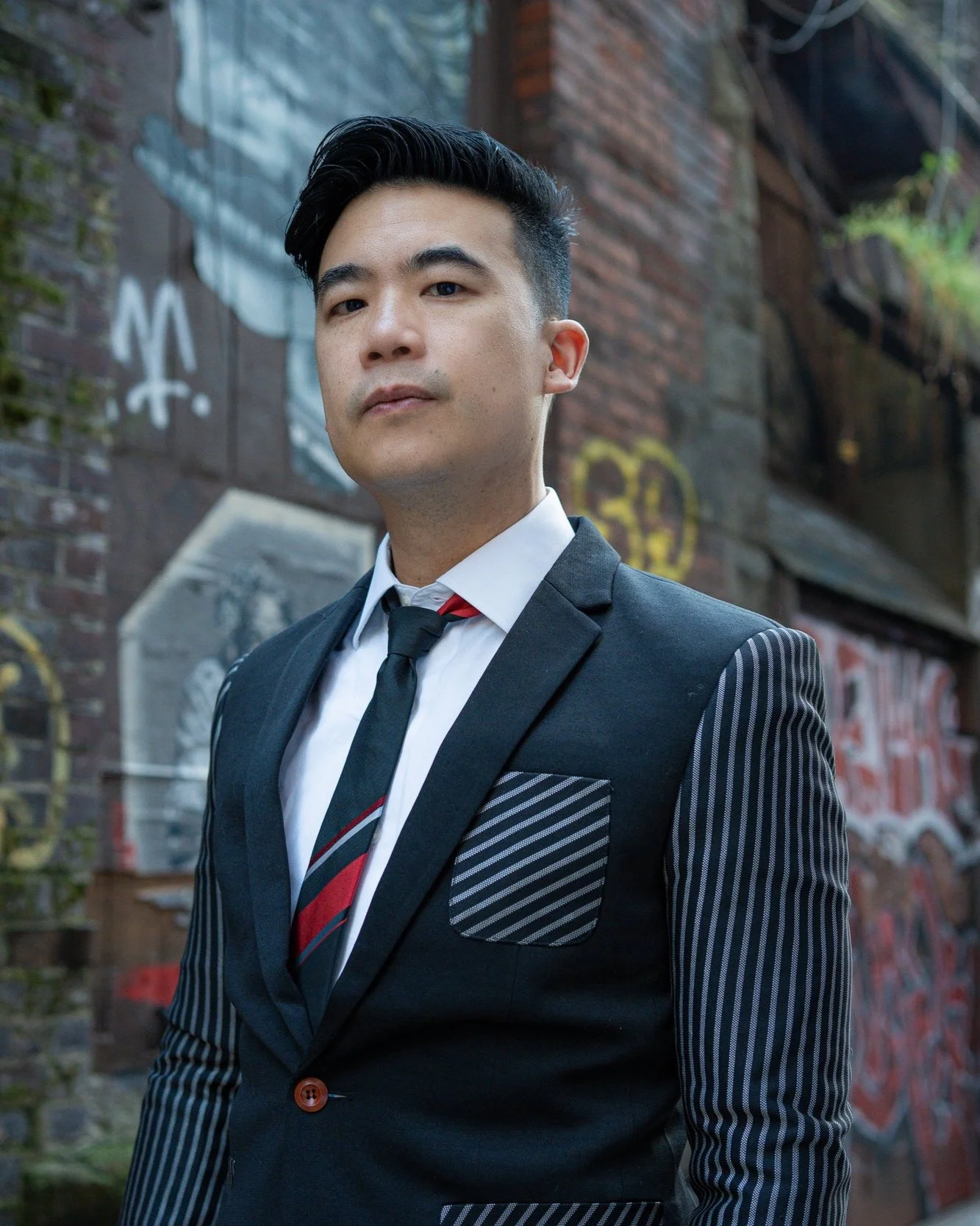
Winning Matal v. Tam wasn't the end of Simon's involvement in First Amendment and intellectual property law — it was the beginning of a broader role as an advocate for free expression.
In Iancu v. Brunetti (2019), Simon filed an amicus curiae brief at the U.S. Supreme Court in support of Erik Brunetti, whose trademark application had been denied on the grounds that it was "immoral or scandalous." The Court ruled in Brunetti's favor, applying the viewpoint discrimination framework established in Matal v. Tam.
Simon has since submitted amicus briefs in additional cases involving First Amendment and artistic expression rights, including Knox v. Commonwealth of Pennsylvania and Gilliam v. Tennessee (2025), a case involving a First Amendment challenge to state licensing requirements as applied to an independent artist. He also published numerous Op-Eds and essays on protecting creative expression as well as supported legislation to protect civil liberties.
His ongoing work reflects a consistent principle: that the rights established in Matal v. Tam are only meaningful if they're actively defended in subsequent cases.
Interested in Simon's perspective on current First Amendment and IP law developments? Book him for your event →


Bring Simon to Your Campus or Classroom
There is no substitute for hearing the story directly from the person who lived it.
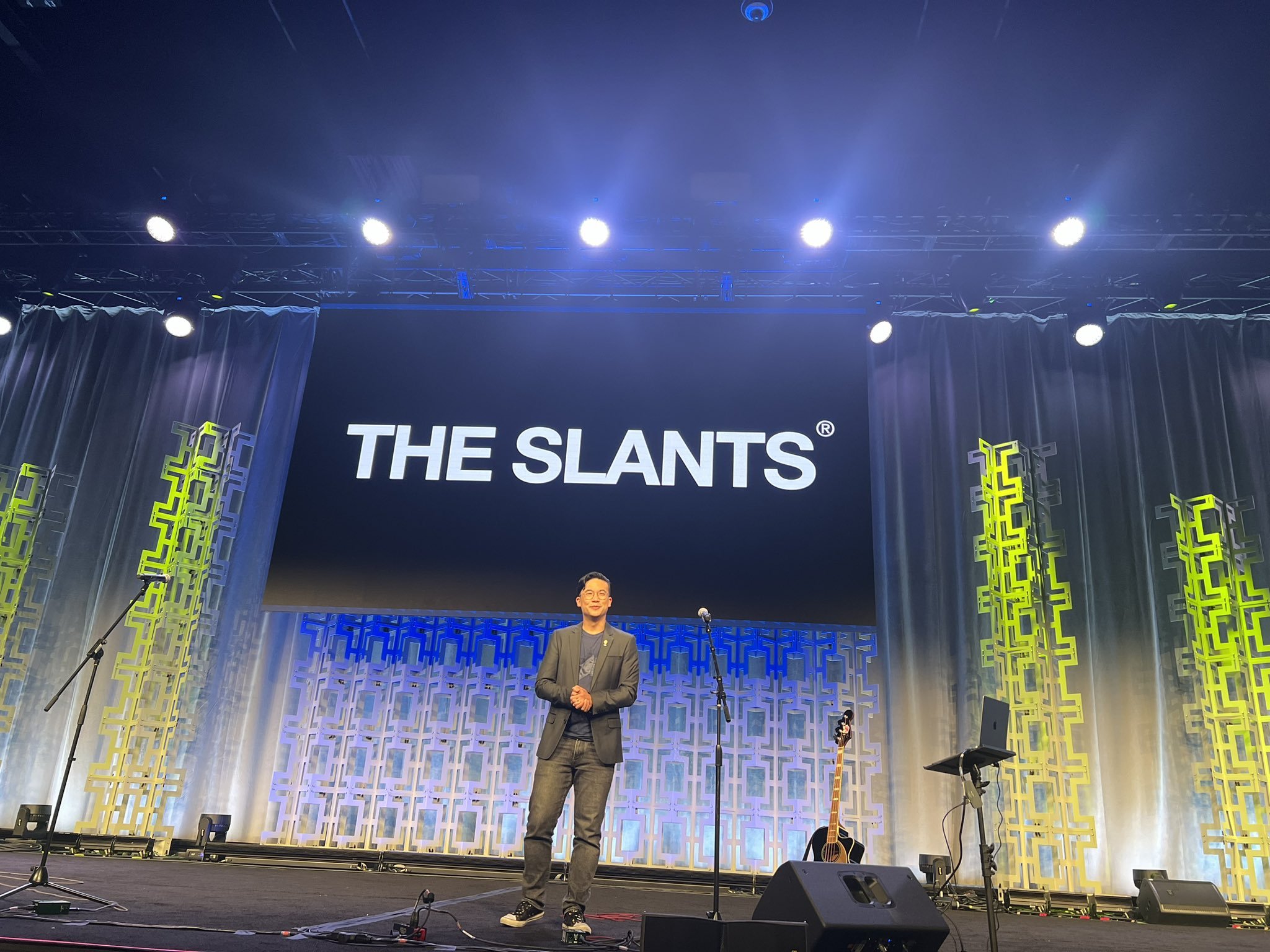
Simon Tam is the central figure in one of the most widely taught First Amendment cases in recent history — and he brings Matal v. Tam to life in a way no textbook, case brief, or lecture can replicate. When students can ask questions of the actual litigant, the law stops being abstract. The Constitution becomes something real people fight for, at a real cost, over real years.
Simon has spoken everywhere from K–12 assemblies to law school symposia, adapting the story and its lessons for audiences at every level. Whether your students are encountering the First Amendment for the first time or studying trademark law in depth, Simon meets them where they are and makes civic education relevant, urgent, and genuinely unforgettable.
Available formats include keynote addresses, classroom visits, panel discussions, facilitated workshops, and virtual events. Additional programming options are available for multi-session residencies and extended campus visits. All presentations can be tailored to your course theme, event focus, or learning objectives.
For law schools and bar associations, Simon's presentations are approved for Continuing Legal Education (CLE) credits.