
Refuse Apathy. Embrace Curiosity.

The Enspeechification Effect
This one's for the policy wonks, the legal nerds, and the civic builders. Cory Doctorow coined "enshittification" to describe how platforms degrade by design. I want to borrow more than just the shape of that idea for something happening in speech law right now.
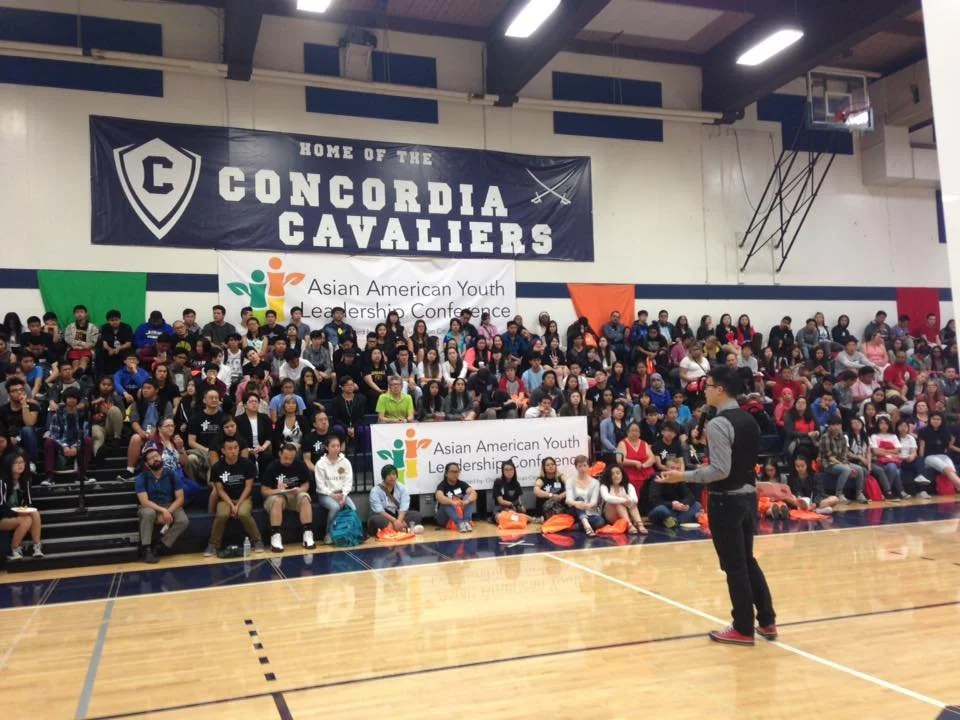
What Asian Pacific American Heritage Month Means Today
At its best, an APAHM event involves the whole room, not just the people in it who happen to share my background. At its worst, it collapses into what writer Tim Wise once called the three F's of multicultural awareness: food, fabric, and festival.

Why I Don't Dumb Down My Supreme Court Talks for High School Students
People are often surprised that I give essentially the same caliber of talk to federal judges and attorneys at continuing legal education conferences as I do to high school students, but they shouldn't be.

Why Americans Don't Take Shoes Off
Your shoes are dirtier than a toilet seat. That fact alone isn't really the point. What's interesting is what we do once we know it — and what that reveals about how we move through the world more broadly.

When Free Speech Depends on Who's Burning What
I want to define a version of the mirror precisely, because I'll use it throughout this piece: a system in which identical expressive acts are evaluated differently depending on political alignment, whether through public rhetoric or through how a law actually gets enforced.

When the Means Become the End: Intellectual Property and the Public Interest
Intellectual property regimes were justified as instruments for promoting public welfare. Increasingly, however, legal doctrine and business practice have treated the protection of rights holders as an end in itself rather than as a means to that public purpose.

The Question I Wish I'd Answered Differently About Free Speech
In 2019, I appeared on a Washington Post Live panel discussing rap lyrics, The Slants' Supreme Court case, and the First Amendment. Looking back, I realize I answered an important question incorrectly — not because what I said was false, but because it wasn't complete.

When a Trademark Complaint Can Cost More Than a Listing
When a trademark complaint hits a global marketplace like Etsy, the consequences can extend far beyond a single listing. A recent dispute over the word “bruh” illustrates how trademark registrations, platform takedowns, seller status, lost sales, and limited appeal mechanisms can collide and raise bigger questions about trademark enforcement and the gap between a complaint and an actual legal determination.

What Does a More Perfect Union Really Mean?
On an average day, somewhere between 100,000 and 135,000 flights take off and land around the world. Imagine, for a moment, that air travel operated at 99 percent safety. It is a number that sounds, on its face, pretty good.

Why I Never Ran for Office
People started telling me I had the right temperament for office. I started to believe some of it myself. But I never ran.

Dolly Parton Was Punk Rock
She spent a career being underestimated because of how she looked and talked, so she made that miscalculation the whole point. She never asked anyone's permission to be taken seriously. She just kept being undeniable until the labels other people put on her stopped fitting.

Do We Still Need Chinatowns? That's the Wrong Question.
My bandmate Joe and I are writing a musical, and neither of us has any real experience in theater beyond sitting in the audience. Underneath the music and the food and the story, there's a question we keep circling.

Demon Hunter vs. KPop Demon Hunters: When the Hunter Becomes the Hunted
A Christian metal band called Demon Hunter is suing Netflix over KPop Demon Hunters, the most-watched original title in the company's history. My first reaction was that this looks opportunistic. My second reaction was that they might have a real claim.

Matal v. Tam Is Still Rewriting Free Speech Law
When I started fighting for the right to register The Slants as a trademark, most experts expected the case to remain narrow. Nine years later, it shows up in cases about social media regulation, professional speech doctrine, and government coercion of private speakers.

The Dog Toy That Beat Jack Daniel's (Again) …And What It Reveals About Trademark Law
The Ninth Circuit just reversed Jack Daniel's tarnishment win over a poop-pun dog toy. The outcome is reasonable. But the doctrine that nearly killed the toy — and the constitutional question nobody asked — are worth chewing on.

Why Can't I Say That Word Too?
Most arguments about reclaimed language eventually collapse into the same frustrated question: why can they say it if I can't? The question assumes reclaimed words all work the same way. They don't.

The Fourth Circuit Just Used My Case to Protect an Anti-Cop License Plate
Today the Fourth Circuit ruled in favor of a Virginia driver displaying a license plate reading "FTP&ATF,” an acronym for "Fuck the Police and the Bureau of Alcohol, Tobacco, Firearms and Explosives." To get there, Judge Pamela Harris cited Matal v. Tam — my case — as the controlling analogy.

A Case That Brought Everyone to the Table
Several years ago, five student organizations co-sponsored my visit — including the Federalist Society and the American Constitution Society. They ordered pizza together. Nobody seemed to find this remarkable.

Why We Need to Stop Treating Arts Funding Like Charity
Arts funding is often treated as charity. In practice, it functions as civic infrastructure. That distinction sounds semantic until you look at what it actually determines.

I Used to Tell People to Read the Comments. I Was Right…But I Was Also Wrong.
In 2017, I gave a TED talk called "Yes, Read the Comments Section." The argument was simple: disengaging from people you disagree with is its own kind of failure. I believed that then. I still (mostly) believe it now.