The Asymmetry of Whiteness
Yick Wo v. Hopkins (1886) · United States v. Wong Kim Ark (1898)
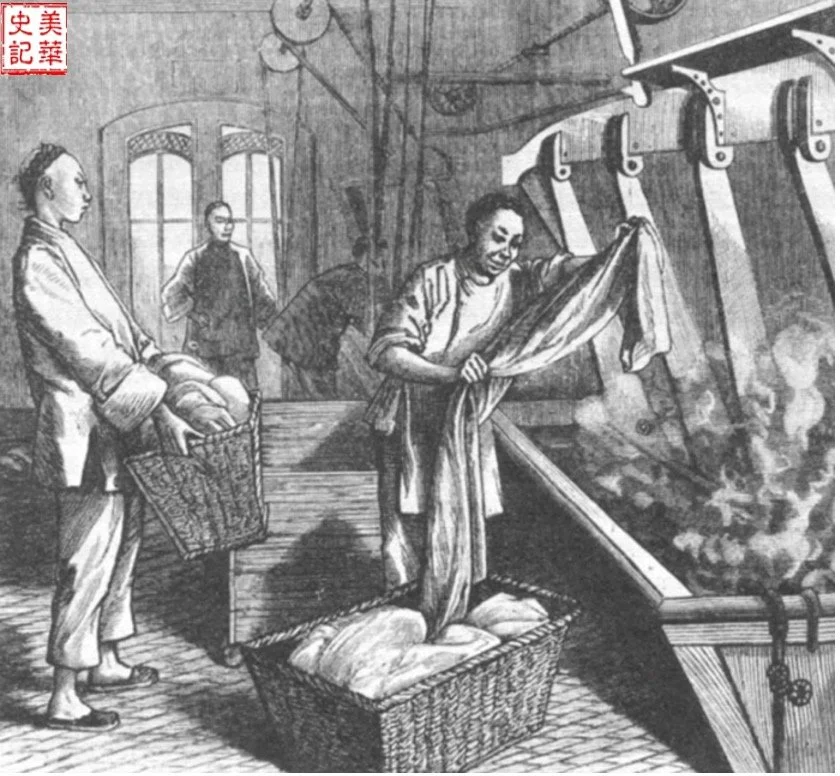
By 1880, Chinese immigrants operated a large majority of the laundries in San Francisco, a business with low startup costs that didn't require much English and welcomed almost anyone willing to do hard, hot, unglamorous work.1 That same year, the city's Board of Supervisors passed an ordinance requiring anyone operating a laundry in a wooden building to obtain a permit from the Board. Of the city's 320 laundries, 310 sat in wooden buildings, which described nearly all of San Francisco's housing stock at the time, laundries included.2 The ordinance read like an ordinary fire-safety measure. Enforced, it was something else entirely.
Related Cases and Precedents
Chy Lung v. Freeman (1875) — A decade earlier, the same kind of unequal, discretionary enforcement that Yick Wo would later strike down already showed up in California's immigration bond scheme, a different mechanism aimed at a similar end.
Chae Chan Ping v. United States (1889) / Fong Yue Ting v. United States (1893) — Decided in the years immediately surrounding both cases in this piece, these cases built the plenary power doctrine that would let the federal government do, through immigration and deportation law, much of what Yick Wo said cities couldn't do through selectively enforced ordinances.
The Geary Act of 1892 — Required exactly the kind of documentary proof of identity and residence that Wong Kim Ark voluntarily assembled before his 1894 trip, turning what had been a precaution into compulsory law for Chinese residents generally.
Plyler v. Doe (1982) — Decades later, the Supreme Court extended Yick Wo's "all persons within the territorial jurisdiction" logic to hold that undocumented immigrant children could not be denied public education, citing the same equal protection principle this case established for noncitizens generally.
Ongoing birthright citizenship litigation (2025–present) — A 2025 executive order disputing birthright citizenship for children of undocumented immigrants has drawn on arguments that test the boundaries of the holding Wong Kim Ark established in 1898. As of this writing, the underlying legal questions remain in active litigation rather than settled.
Sources and Further Reading
For deeper reading:
Charles J. McClain, In Search of Equality: The Chinese Struggle Against Discrimination in Nineteenth-Century America (University of California Press, 1994)
Amanda Frost, You Are Not American: Citizenship Stripping from Dred Scott to the Dreamers (Beacon Press, 2021)
National Archives, "AAPI Exclusion and the Case of Wong Kim Ark"
Footnotes
KQED, "How a Chinese Laundryman Shaped US Civil Rights From San Francisco," 2025. ↩
Yick Wo v. Hopkins, 118 U.S. 356 (1886), statement of facts. ↩
HistoryNet, "Yick Wo v. Hopkins: A City's Discriminatory Practices Come to Light."; see also Charles J. McClain, In Search of Equality: The Chinese Struggle Against Discrimination in Nineteenth-Century America(University of California Press, 1994), on uncertainties in the historical record regarding the laundryman's personal name. ↩
Yick Wo v. Hopkins, 118 U.S. 356 (1886), summarizing permit application statistics from the case record. ↩
Hoodline, "Yick Wo and the San Francisco Laundry Litigation of the Late 1800s," drawing on McClain, supranote 3. ↩
Id.↩
Yick Wo v. Hopkins, 118 U.S. 356 (1886); HistoryNet, supra note 3. ↩
HistoryNet, supra note 3, on the Six Companies' role and McAllister's retention; see also Ballotpedia, "Matthew Hall McAllister," and WikiTree, "Matthew Hall McAllister (1826–1888)," clarifying the distinction between the elder McAllister, a federal circuit judge who died in 1865, and his son, the trial attorney who argued this case. ↩
HistoryNet, supra note 3, quoting Judge Lorenzo Sawyer's opinion in the related Wo Lee matter. ↩
Yick Wo v. Hopkins, 118 U.S. 356 (1886). ↩
Id.↩
San Francisco Standard, "A $10 Fine. A Chinese Laundry. And a Supreme Court Ruling...," 2026. ↩
San Francisco Heritage, "Press Release: San Francisco to Mark the 140th Anniversary of Yick Wo vs. Hopkins."↩
HISTORY.com, "The Immigrant Son Who Fought for Birthright Citizenship."↩
United States v. Wong Kim Ark, 169 U.S. 649 (1898), statement of facts via Cornell Legal Information Institute. ↩
Supreme Court Historical Society, "United States v. Wong Kim Ark."; National Archives, "AAPI Exclusion and the Case of Wong Kim Ark."↩
United States v. Wong Kim Ark, 169 U.S. 649 (1898). ↩
Prism News, "Wong Kim Ark Won a Landmark 1898 Case, But His Family Forgot His Name."↩
HISTORY.com, supra note 14, on George Collins's advocacy for a test case. ↩
HISTORY.com, supra note 14, quoting the government's filed opposition. ↩
United States v. Wong Kim Ark, 169 U.S. 649 (1898). ↩
Id. (Fuller, C.J., dissenting); see also University of Washington Libraries, "1890s: United States v. Wong Kim Ark."↩
Museum of Chinese in America, "Wong Kim Ark Day."↩
Prism News, supra note 18, on the 1901 El Paso detention. ↩
Amanda Frost, You Are Not American: Citizenship Stripping from Dred Scott to the Dreamers (Beacon Press, 2021), on the immigration histories of Wong Kim Ark's sons. ↩
Prism News, supra note 18. ↩
A Laundry, a Name, and Two Hundred Permits
The laundryman at the center of the case is identified in some historical sources as Lee Yick, though the record is not entirely settled, the case caption preserved only the business's name, and Chinese naming conventions of the period complicated how names made it into English-language court documents at all.3 He'd run his laundry at 349 Third Street for over two decades by the time the new rule took effect. The laundry's name, Yick Wo, is a Chinese phrase meaning something close to "harmony and tranquility," and the city's fire wardens and health inspectors had certified the place safe every year without incident. In 1884, under the new ordinance, he was granted a license. In June 1885, when it came time to renew, the Board said no.
He wasn't alone. Of roughly two hundred Chinese-owned laundries that applied for permits under the ordinance, all but one were denied. Of the non-Chinese applicants seeking the same permit for the same kind of building, all but one were approved.4 The numbers alone make the ordinance's actual purpose hard to miss, and contemporaries weren't shy about saying so out loud. Years earlier, when the city had floated an even blunter version of the same idea, San Francisco's Board of Supervisors had specifically discussed restricting laundries "by the Chinese" to one designated part of the city, language only dropped from the final ordinance because city lawyers worried it would be too obviously unconstitutional to survive.5
He, or whoever was running the laundry by that point, kept it open anyway. He was arrested, fined ten dollars, and when he refused to pay, sentenced to jail.6 Court records ultimately identified him by the laundry's name rather than any personal name, the sheriff who booked him, a man named Peter Hopkins, having apparently taken the sign on the building at face value.7 The case would carry that uncertainty into the United States Reports forever: not a personal name, but Yick Wo v. Hopkins, a business's name standing in for whoever the man actually was. It is a small mistake, the kind that's easy to read past. It is also a pattern this series runs into more than once: a legal system that, even when it ultimately rules in someone's favor, often can't be bothered to get the basic facts of who that person actually is correct along the way. That particular carelessness shows up again much later in this series, in a case far closer to home.
He wasn't fighting it alone, either. The Chinese Six Companies, known today as the Chinese Consolidated Benevolent Association, a network of mutual-aid organizations that had been the backbone of San Francisco's Chinese community since the Gold Rush, reportedly raised as much as $20,000 to retain Hall McAllister, one of the most prominent trial attorneys in San Francisco at the time.8 (McAllister is sometimes described in secondary accounts as a former federal judge; that appears to be a conflation with his father, Matthew Hall McAllister, who served on the U.S. Circuit Court for California until his death in 1865, two decades before this case. The son who argued Yick Wo's case was, by every contemporary account, simply the most sought-after litigator in the city, no judicial background required.) This was the same institutional muscle that would show up again a few years later behind Wong Kim Ark and, decades after that, in the resistance to the Geary Act's registration requirements. A community shut out of voting and citizenship built its own legal infrastructure in the one place still open to it: court.
A U.S. Circuit Court judge named Lorenzo Sawyer had already seen through the ordinance before the Supreme Court ever touched it. Hearing a related case involving another laundryman, Wo Lee, Sawyer wrote plainly that the city's real purpose was "to drive out the Chinese laundrymen and not merely to regulate the business for the public safety," and that this truth "must be apparent to every citizen of San Francisco."9 He said so, and then ruled against Wo Lee anyway, believing himself constrained by the California Supreme Court's prior decision upholding the same ordinance and by the procedural posture of the case in front of him. Seeing the truth clearly and ruling against it anyway, for reasons that felt to the judge like they weren't really his choice, turns out to be its own kind of pattern, one this series keeps running into.
"An Evil Eye and an Unequal Hand"
Yick Wo v. Hopkins reached the Supreme Court combined with Wo Lee's case, and on May 10, 1886, the Court ruled unanimously for the laundrymen. Justice Stanley Matthews's opinion didn't need to find that the ordinance was written with discriminatory language, because it wasn't. The text was neutral. What mattered, the Court held, was what the city had actually done with that neutral text: enforced it so that it fell "with a mind so unequal and oppressive" on one group of people that the law's apparent fairness on paper became meaningless in practice. It wasn't the bare statistics alone that moved the Court; it was that numbers this lopsided, two hundred denials against one approval, with the reverse true for everyone else, left intentional discrimination as the only plausible explanation. The Court's own words for that conclusion have outlasted almost everything else about the case: a law administered "with an evil eye and an unequal hand" violates the Constitution exactly as surely as a law that discriminates outright.10
The Court went further than that single phrase, in ways worth sitting with directly. The Fourteenth Amendment's guarantee of equal protection, the opinion held, applies to "all persons within the territorial jurisdiction," not just citizens.11 The laundryman at the center of this case was not, and under the laws of the era could never become, a U.S. citizen. The Constitution protected him anyway, not as a special exception, but because the text never said otherwise. That holding would outlive nearly every other part of the case. It is still cited today, in immigration proceedings and civil rights litigation that have nothing to do with San Francisco, laundries, or the nineteenth century, because the underlying problem, a government using a neutral rule to reach a discriminatory result, never went out of style.
The laundry at 349 Third Street is gone. San Francisco's streets shifted after the 1906 earthquake, and the address now corresponds to a parking lot at Third and Harrison.12 In 2026, on the case's 140th anniversary, San Francisco Heritage and the Chinese Historical Society of America began working with the city to place a permanent marker there, an attempt, a century and a half late, to make visible what the Chinese laundrymen who fought this case actually built for everyone who came after them.13
Born Here, Told Otherwise
Twelve years after Yick Wo's case was decided, a cook named Wong Kim Ark stepped off the steamship Coptic in San Francisco Bay, expecting to come home.
He'd been born in the city in 1873, in an apartment above his father's shop in Chinatown, to parents who had emigrated from China and built a life and a business in San Francisco.14 He'd already had his citizenship recognized once: in 1890, returning from an earlier visit to China, customs officials let him land specifically because he was, as they put it, a native-born citizen of the United States.15 In 1894, he prepared to travel again, and this time he took his own precaution: he had a photograph taken and notarized, separate from anything the law actually demanded of him. Immigration officials in San Francisco, meanwhile, had taken to requiring written statements from white witnesses to vouch for Chinese American travelers' identity and birthplace, a practice not yet written into statute but already standard at the port; Wong secured three such statements before he left.16 None of it was enough. He had learned, like every Chinese resident of California in this period had learned, that paperwork was the only language the system seemed willing to listen to, and he had assembled as much of it as he could.
It didn't matter. When he returned in August 1895, the Collector of Customs in San Francisco refused to let him land, on the sole ground that he was not a citizen, his birth, his documents, and his own prior entry as a recognized citizen notwithstanding.17 He was held for five months, shuffled between steamships anchored off the California coast, before he was finally released on $250 bail and allowed to go back to work as a cook while his case made its way through the courts.18
This was not simply bad luck. A San Francisco attorney named George Collins was among those urging the federal government to bring exactly this kind of case before the Supreme Court, hoping to overturn an earlier, more favorable ruling on Chinese American birthright citizenship that he believed was vulnerable to reversal; the government, independently inclined to revisit the question, eventually settled on Wong Kim Ark as its test case.19 Whatever the precise mix of orchestration and circumstance, Wong himself had no real say in any of it. The fight was not one he chose, the way it had already not been a choice for the laundryman in Yick Wo and would not be a choice for Fong Yue Ting either: he was simply the person standing in the spot where a larger legal argument happened to need a body.
The government's position, laid out by its own attorneys, was blunt about what it actually believed: Wong Kim Ark, they argued, was "by reason of his race, language, color and dress, a Chinese person," and a Chinese person could not be subject to the jurisdiction of the United States in the way the Fourteenth Amendment required, regardless of where he happened to be born.20 A federal district judge, William Morrow, disagreed and ordered Wong released as a citizen. The government appealed all the way to the Supreme Court, where the question became one the Court had never squarely answered before: did birth on American soil make you a citizen, full stop, or did your parents' eligibility for citizenship matter too?
The Court Said Birthplace Wins
On March 28, 1898, the Supreme Court ruled 6 to 2 that it did not matter who your parents were or whether they could ever become citizens themselves. Birth in the United States made Wong Kim Ark a citizen at the moment he was born, and nothing that happened afterward, including two trips to China and an immigration officer's say-so, could take that away.21 Chief Justice Melville Fuller's dissent argued the opposite: that a child's citizenship followed his parents' allegiance, and that Wong's parents owed allegiance to the Chinese emperor, which meant Wong did too, regardless of the accident of where he happened to be born.22 That argument lost, 6 to 2, and the version of citizenship that won is the version that has governed the country for the century and a quarter since.
The decision did something Yick Wo alone couldn't: it locked Chinese American birthright citizenship in place at the exact moment federal exclusion policy was working as hard as it could to make Chinese American life in this country as precarious as possible. After San Francisco's 1906 earthquake destroyed much of the city's birth and immigration records, the Wong Kim Ark precedent meant that many Chinese immigrants could plausibly claim American birth in ways that would have been harder to verify or disprove had those records survived, contributing to what later became known as the "paper son" system of claimed family relationships.23 A ruling about one man's citizenship ended up, by accident of timing and disaster, reshaping who could plausibly claim to belong at all.
None of that protected Wong Kim Ark personally, for very long. According to some accounts, he was detained again in 1901 near El Paso, Texas, by an immigration official enforcing the Chinese Exclusion Act who either didn't know or didn't credit that the Supreme Court of the United States had already ruled, by name, that this specific man was a citizen.24 He was released on bond, the case against him eventually dropped, and he went back to the quiet, undocumented rest of his life: a cook, a father, a man who spent decades afterward fighting smaller, less famous versions of the same battle on behalf of his own children, several of whom immigration officials accused of being impostors rather than the sons of a man the highest court in the country had already recognized as American.25
He is, by name, one of the most cited plaintiffs in American constitutional law. According to at least one account from his own descendants, he is also someone whose family, generations later, had largely lost track of his name and his connection to the case. One of his great-grandchildren has described learning of the connection not from a relative or a textbook, but from a newspaper clipping, found by chance, pinned to a memorial photo decades after he died.26Winning a case this large did not, in that telling, make him visible within his own family. The win outlived him in a way his name apparently didn't, at least for a time.
Two Cases, the Same Asymmetry
Read together, Yick Wo and Wong Kim Ark describe two related but distinct mechanisms at work on the same community. Yick Wo exposed how a facially neutral ordinance could function as a precision instrument of exclusion once official discretion entered the picture: the same law, applied by the same officials, produced opposite outcomes depending entirely on who was asking, and the distortion succeeded, since the ordinance functioned exactly as its enforcers intended until the Court intervened. Wong Kim Ark shows something closer to an attempted version of the same move that ultimately failed: the government argued that the plain language of the Fourteenth Amendment, written and ratified decades earlier, should bend to accommodate a racial exception its drafters hadn't written into the text, and the Court refused to let it. One case shows a neutral rule successfully twisted in practice. The other shows the same impulse to twist a rule, this time aimed at the Constitution's own words, meeting a Court unwilling to go along.
Both cases won. That matters, and matters more than the losses in Chae Chan Ping and Fong Yue Ting covered in this series' first piece. Yick Wo's equal protection holding and Wong Kim Ark's citizenship holding are still law today, cited constantly, unreversed for over a century, and that durability is itself part of the story: these are not cases whose victories quietly evaporated the way Chy Lung's did. But winning didn't make either man visible in his own lifetime, and it didn't stop officials from immediately testing the limits of what the government had just lost. Five years after Wong Kim Ark, his own citizenship, confirmed by name by the Supreme Court, apparently still wasn't enough to stop a different official from detaining him again at a different border crossing, at least according to the version of events that survives. The Geary Act, built on the same plenary power doctrine Chae Chan Ping established, was already federal law by the time Wong Kim Ark was decided, requiring Chinese residents to produce the kind of white-witness documentation that had become standard practice at California ports of entry, the same practice Wong had voluntarily anticipated and built upon with his own notarized photograph, and none of which had been enough to keep him from being detained anyway.
A win at the Supreme Court settles a legal question. It does not, on its own, settle how the people enforcing the law on the ground will choose to treat the next person who looks like the plaintiff who already won.