
The Same Justice, Two Answers
Takao Ozawa v. United States (1922) · United States v. Bhagat Singh Thind (1923)
For more than a century, American naturalization law asked the same six words of nearly every immigrant who wanted to become a citizen: are you a free white person? Courts had wrestled with what that phrase meant before, in scattered lower-court rulings involving Syrian, Armenian, and other immigrants whose racial classification wasn't obvious to the officials processing their paperwork, but the Supreme Court itself had never squarely settled the question. In the early 1920s, that gap closed twice, three months apart, in front of the same justice. What he decided both times has a strange distinction in American constitutional law: it is hard to find two rulings, written so close together, by the same person, that rely on more directly different reasoning to reach the same result.
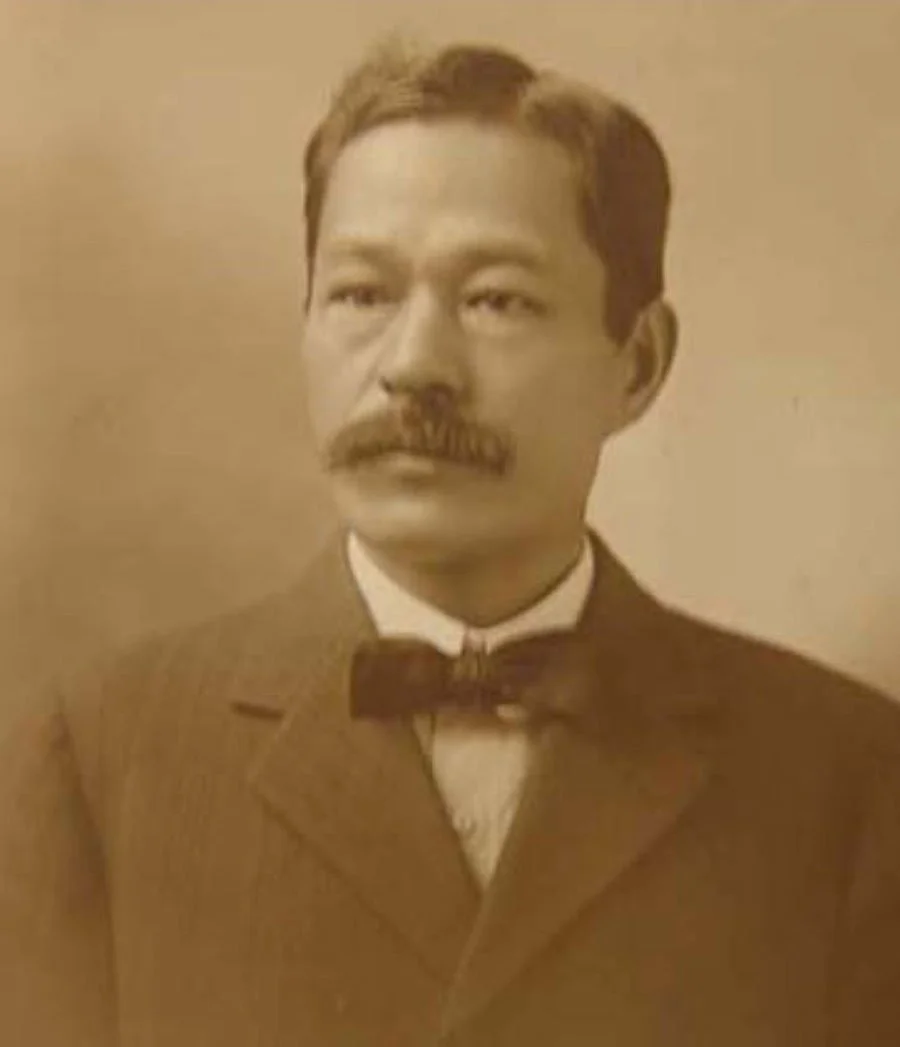
Twenty Years, and Still Not White Enough
Takao Ozawa had been in the United States for two decades by the time his case reached the Supreme Court. He'd arrived from Japan in 1894, graduated from Berkeley High School, attended the University of California for nearly three years, and settled in Honolulu, where he worked, raised children educated entirely in American schools, attended a Christian church, and spoke English at home.1 In 1914, he applied for citizenship under the Naturalization Act of 1906, which limited eligibility to "free white persons" and "persons of African nativity or African descent."2 He did not argue that the law should change. He argued that he already qualified under it: that whatever "white" meant, it ought to describe a person who had spent twenty years living the way he had.
His was not an accidental test case. The Pacific Coast Japanese Association had been searching for years for the ideal plaintiff to bring this exact question before the Supreme Court, and Ozawa, by every measure the law claimed to value, character, residence, assimilation, fit the part better than almost anyone they could have found.3 The government's own attorneys, arguing against him, did not dispute any of it. They conceded he would make a fine citizen. They argued, simply, that none of it mattered, because the law had never been about character to begin with.
The case took years longer to resolve than its facts alone would suggest. Some historians have connected the delay to the diplomatic climate of the moment: Japan had been an American ally in the First World War and had just been publicly humiliated at the Paris Peace Conference, where its delegation walked out after failing to secure a racial equality clause in the founding covenant of the League of Nations.4 California had passed a new Alien Land Law in 1920, barring Japanese immigrants from owning property. An unfavorable ruling, at exactly this moment, risked further straining an already tense relationship with Japan, and the Japanese American committee backing Ozawa's case deliberately sought a companion test case and timed its filing with this context in mind. The case did not reach a decision until November 13, 1922, eight years after Ozawa first applied.
Justice George Sutherland wrote for a unanimous Court. He acknowledged, almost as an aside, that judging race by skin color alone would create "a confused overlapping of races and a gradual merging of one into the other, without any practical line of separation."5 He rejected that approach for exactly the reason it might have helped Ozawa: it was too imprecise to reliably exclude anyone. Instead, Sutherland held that "free white person" meant, specifically, a person of what he called the Caucasian race, treating that category as the prevailing scientific classification of the era rather than questioning whether the science itself was settled or contested. Japanese people, the opinion stated flatly, were "clearly of a race which is not Caucasian," and that was the end of the inquiry. Ozawa's English, his children's schooling, his church, his twenty years, none of it was relevant to a test that had never asked about any of those things.
Decades later, Ozawa's daughter, Edith Takeya, described what it was like to be a child reading about her father's case in the newspaper. She had assumed, she said, that "only bad things came out in the paper," and she remembered feeling ashamed.6 It is one of the only first-person accounts that survives from inside any family touched by this entire series of cases, and it says something the legal record alone cannot: that a Supreme Court ruling about an abstract legal category lands, for the people closest to it, as something closer to a verdict on the family itself.
Caucasian, Yet Somehow Not White
Bhagat Singh Thind arrived in Seattle from the Punjab region of India in 1913, one of several thousand Punjabi Sikh immigrants who had crossed the Pacific in the years before the First World War, many of them fleeing unrest and repression under British colonial rule.7 He studied at the University of California, Berkeley, and worked summers at lumber mills in Oregon. When the United States entered the war in 1917, he enlisted in the U.S. Army, training at Camp Lewis in Washington, where he was reportedly among the first soldiers in the American military permitted to serve while wearing a turban, in keeping with his Sikh faith.8 He was honorably discharged in December 1918, his character rated "excellent."
While still in uniform, Thind applied for citizenship in Washington state. A district court granted it. Four days later, the Bureau of Naturalization had it revoked.9 He tried again in Oregon in 1919. That case dragged on for over a year before a federal judge granted him citizenship in November 1920, only for the government to appeal once more, eventually sending the case to the Supreme Court.
Thind's argument, unlike Ozawa's, leaned directly on the reasoning the Court had used just three months earlier. If "white" meant "Caucasian," as Ozawa had just held, then Thind believed he had a stronger claim than almost any other Asian immigrant who had tried this argument before him. Contemporary ethnology of the era classified the people of northern India, including the Punjab, as belonging to the Caucasian race, the same broad category that supposedly included most Europeans. Thind's attorney, Sakharam Ganesh Pandit, an Indian immigrant himself who would later face his own denaturalization fight as a direct result of this case, built the argument around exactly that science: high-caste Hindus, the brief argued, descended from the same Aryan racial stock that had populated ancient Europe, and shared a real, traceable, scientifically documented kinship with the people Ozawa had just confirmed were unquestionably white.10
Justice Sutherland, writing again for a unanimous Court, did not need to decide whether Thind's ethnology was correct. He assumed, without deciding, that contemporary anthropology might well classify Thind as Caucasian, and held that the question didn't matter, because Congress had never intended the statute to follow scientific taxonomy in the first place. "Free white person," he wrote, was "a word of common speech, not of scientific origin," and had to be interpreted "in accordance with the understanding of the common man." The common man, in Sutherland's estimation, would not look at Bhagat Singh Thind and see someone white, regardless of what any anthropologist might say about his ancestry.11 Linguistic kinship, the opinion noted, was not the same thing as racial kinship: "the term 'Aryan' has to do with linguistic, and not at all with physical, characteristics."
Read side by side, the two opinions do not merely reach different results. They rely on different definitions of the same word to get there. In Ozawa, the Court rejected appearance as the test specifically because it was too imprecise, then anchored its ruling in the era's prevailing scientific classification. Three months later, facing a plaintiff whose claim that very science seemed to support, the Court set the scientific question aside entirely and anchored its ruling in ordinary appearance, the "common man's" judgment, instead. The only thing that stayed constant across both cases was the outcome the Court ultimately reached. Whether by design or simply by the weight of the assumptions everyone involved already carried into the courtroom, the reasoning shifted to fit whichever method would keep the same group of people on the outside of the category, regardless of which direction "outside" happened to require that week.
What the Words Cost, After the Ruling
The damage did not stop at the courtroom door. Because Thind did not merely deny future applicants citizenship but held that South Asian immigrants had never properly qualified as white in the first place, the government treated the ruling as license to go back and unwind citizenships it had already granted. Between 1923 and roughly 1927, federal attorneys filed denaturalization proceedings against South Asian Americans across the country, stripping citizenship from somewhere between fifty and seventy people who had already taken the oath, built homes, and, in many cases, formally renounced their previous citizenship in order to become American in the first place.12 Thind's own attorney, Pandit, was among those targeted; he avoided denaturalization on appeal to the Ninth Circuit through a mix of equitable and procedural arguments, including the unfairness of stripping citizenship from someone who had relied on it for years.13 Most of the men stripped of citizenship in this period had no comparable legal defense available to them.
One of them was Vaishno Das Bagai. Bagai had arrived in San Francisco in 1915 with his wife, Kala, and their three young sons, built a general store called Bagai's Bazaar, and become a naturalized citizen in 1921, two years before Thind was decided.14 In 1924, the federal government sued to cancel his citizenship, arguing he had improperly represented himself as white, even though he had done so years before the Supreme Court had said anything at all on the subject. The courts accepted the argument despite the obvious unfairness of holding him to a standard that didn't exist when he naturalized. By 1925, his citizenship was gone. Without it, California's Alien Land Law applied to him in full force; he was forced to give up his store and his property. In 1928, he was refused a passport to visit family in India, told instead he should apply for a British passport and resume the citizenship of the colonial government he had spent years opposing as a supporter of Indian independence. He would not do that. On March 16, 1928, Vaishno Das Bagai died by suicide, leaving a letter to the San Francisco Examiner that named what had been done to him plainly: "Is life worth living in a gilded cage?"15
This is not a detail to include for effect. It is the place where an abstract argument about Caucasian ancestry and the common man's understanding of race stopped being abstract for one specific family, with consequences that ended a life. The Supreme Court did not order anyone's death. It built, across two opinions roughly three months apart, a legal structure flexible enough to be turned against people who had already done everything the law had asked of them, and the government used that flexibility as far as it would go.
Thind himself fared better, in the narrow sense that he survived what happened to him, though not by much margin or much grace. His citizenship, revoked along with the others', was not restored until 1935, when Congress passed a law making any World War I veteran eligible for naturalization regardless of race, the third time in his life he applied for the same thing the country had already taken from him twice before.16 Even that did not fully settle the matter. According to some accounts, Thind was arrested in Omaha, Nebraska, in 1942, under circumstances that remain genuinely unclear and are not well documented; some sources connect it to his long involvement with the Ghadar Party's campaign for Indian independence, though the evidence for any particular motive is thin. What the surviving accounts agree on is the substance of what happened in court: he was ordered to remove his turban, a demand that struck directly at his Sikh faith, a local official called him "nuts," and the judge declared him "unworthy of belief" before handing down the maximum sentence available, ninety days and a hundred-dollar fine.17 He was, by then, an American citizen for the second time. Whatever actually happened in that courtroom, the law's protection did not appear to mean much inside it.
Two Cases, One Justice, No Stable Ground
What Ozawa and Thind demonstrate, read together, is something blunter and more uncomfortable than most legal doctrine likes to admit about itself: that a category like "white," treated by the law as a fixed, knowable fact about a person, functioned in practice as whatever the Court needed it to be to reach the conclusion it ultimately reached in each case. Science was the right tool when science excluded the plaintiff in front of the Court, and the wrong tool, suddenly too narrow, too technical, too disconnected from "common speech," the moment science threatened to include someone the Court was not prepared to include. The same justice wrote both opinions within the same year, and the contradiction between them did not require an explanation, because almost no one reading the opinions at the time was inclined to ask for one.
The practical result reached past the two named plaintiffs almost immediately. Courts and immigration officials in the years afterward frequently relied on Thind's "common understanding" reasoning in cases involving Filipino, Afghan, and Arab applicants, treating the standard as flexible enough to extend to other groups the Court had not directly addressed, though outcomes in these cases varied and did not flow from Thind in any single, uniform way.18 Never given a stable general definition, "white" nonetheless served a stable function across all of these cases: keeping the same door closed, no matter which argument happened to be standing in front of it.
Even a Uniform Wasn't Enough
Two years after Thind, the doctrine reached a man with a stronger personal claim on the country than either Ozawa or Thind had been able to make, and it didn't matter at all. Hidemitsu Toyota had entered the United States in 1913 and served almost a decade in the U.S. Coast Guard, much of it during the First World War, earning eight or more honorable discharges along the way.19 Congress, hoping to reward exactly this kind of wartime service, had passed laws in 1918 and 1919 relaxing the ordinary naturalization requirements for immigrant veterans, letting them skip the usual waiting periods and formal declarations other applicants needed. Toyota applied under these relaxed rules in 1921. A federal court granted his petition, and he became, on paper, an American citizen.
The government sued to take it back, and in 1925 the Supreme Court let them. Justice Pierce Butler, writing for a unanimous Court, read the veteran-naturalization statutes narrowly: Congress had relaxed the residency and procedural requirements for immigrant servicemen, the Court held, but nothing in the text suggested it had touched the older, separate racial requirement Ozawa had just confirmed three years earlier.20 Toyota's discharges, his years of service, the simple fact that he had risked the same things any other Coast Guardsman risked during the war, none of it was relevant to a statute the Court read as silent on race precisely because it assumed Congress hadn't meant to disturb that question at all. His citizenship was revoked.
It is difficult to find a more direct illustration, anywhere in this series, of how little individual merit mattered against a racial line the Court had already decided to enforce. Ozawa had offered twenty years of residence and an American-raised family. Thind had offered the U.S. Army's own willingness to let him serve in a turban and contemporary science's own classification of his ancestry. Toyota offered nearly a decade in the Coast Guard during wartime and a citizenship a federal court had already granted him once. Each offering was different, each one was substantial on its own terms, and the Court found each one equally beside the point. The category never asked what someone had done. It only ever asked what the Court had already decided someone was.
Related Cases and Precedents
United States v. Wong Kim Ark (1898) — Established birthright citizenship by place of birth regardless of race a quarter-century earlier; Ozawa and Thind concern a different and, for adult immigrants, far less forgiving path: naturalization, where Congress retained the power to write race into the law directly, and did.
Takuji Yamashita's naturalization case (decided the same day as Ozawa) — The Court denied Yamashita's citizenship application on the same day and the same reasoning as Ozawa's, demonstrating this was never about one man's individual circumstances.
The Immigration Act of 1924 — Passed two years after Ozawa, this law barred most immigration from Asia outright; the racial ineligibility for citizenship the Court had just confirmed was one of several factors anti-immigration advocates cited in building support for the broader law, alongside other nativist and economic arguments.
The Luce-Celler Act (1946) and the McCarran-Walter Act (1952) — Decades later, Congress reversed course, making Indian and other Asian immigrants eligible for naturalization and finally striking race entirely from the naturalization statute, formally ending the legal regime Ozawa and Thind had built.
Korematsu v. United States (1944) — The same impulse to let "common understanding" of race override individual circumstance, fact, and fairness would resurface two decades later in a far larger and more consequential form, applied this time to American citizens by birth, not immigrants seeking to become citizens at all.
Sources and Further Reading
For deeper reading:
Joan Jensen, Passage from India: Asian Indian Immigrants in North America (Yale University Press, 1988)
South Asian American Digital Archive (SAADA), collected materials on Bhagat Singh Thind and Vaishno Das Bagai
Erika Lee and Judy Yung, Angel Island: Immigrant Gateway to America (Oxford University Press, 2010)
John Tehranian, "Performing Whiteness: Naturalization Litigation and the Construction of Racial Identity in America," Yale Law Journal (January 2000)
A note on this piece: it discusses a death by suicide as a documented historical event and its causes. If you are affected by similar circumstances or are experiencing distress, the 988 Suicide & Crisis Lifeline is available by call or text at 988.
Footnotes
Ozawa v. United States, 260 U.S. 178 (1922), statement of facts; EBSCO Research Starters, "Ozawa v. United States." ↩
Ozawa v. United States, 260 U.S. 178 (1922). ↩
Densho Encyclopedia, "Ozawa v. United States."; Yuji Ichioka, "The Early Japanese Immigrant Quest for Citizenship: The Background of the 1922 Ozawa Case," Amerasia Journal 4, no. 2 (1977). ↩
AABANY Reenactments, "Race, Color, and Citizenship: Ozawa and Thind," drawing on Ichioka, supra note 3, and contemporaneous legal records, on the diplomatic context and deliberate delay surrounding the case. ↩
Ozawa v. United States, 260 U.S. 178 (1922), opinion text via Cornell Legal Information Institute. ↩
Wikipedia, "Ozawa v. United States," citing testimony from the documentary series Race: The Power of an Illusion (California Newsreel, 2003). ↩
National Park Service, "Bhagat Singh Thind." ↩
Id. ↩
Johanna Ogden, "The Telling Case of Doctor Bhagat Singh Thind," Oregon Historical Quarterly 124, no. 1 (2023), on the sequence of citizenship grants and revocations in Washington and Oregon. ↩
Ogden, supra note 9; Daksha Pillai, "United States v. Bhagat Singh Thind: Dual Legacies of a Forgotten Supreme Court Case," Gilder Lehrman Institute. ↩
United States v. Bhagat Singh Thind, 261 U.S. 204 (1923), opinion text via Cornell Legal Information Institute. ↩
SAADA, "United States of America vs. Vaishno Das Bagai," on the scope of denaturalization following Thind; Ian Haney López, White by Law: The Legal Construction of Race (NYU Press, 1996). Estimates of the number affected range from approximately fifty to seventy individuals across cited sources. ↩
Pillai, supra note 10, on Sakharam Ganesh Pandit's denaturalization proceeding and its resolution before the Ninth Circuit. ↩
South Asian American Digital Archive, "Vaishno Das Bagai." ↩
SAADA, supra note 12, quoting Bagai's suicide letter as published in the San Francisco Examiner, March 17, 1928. ↩
National Park Service, supra note 7, on the Nye-Lea Act of 1935. ↩
SAADA, "Bhagat Singh Thind in Jail," TIDES Magazine. Details of this 1942 incident are less thoroughly documented than the central 1923 case and should be read with appropriate caution. ↩
John Tehranian, "Performing Whiteness: Naturalization Litigation and the Construction of Racial Identity in America," Yale Law Journal (January 2000); Haney López, supra note 12, on subsequent invocations of Thind's reasoning in other naturalization disputes. ↩
Toyota v. United States, 268 U.S. 402 (1925), statement of facts via Cornell Legal Information Institute. ↩
Id. ↩